Error Path 3: Payment Initiation Rejected by Any Party in the Instant Transfer
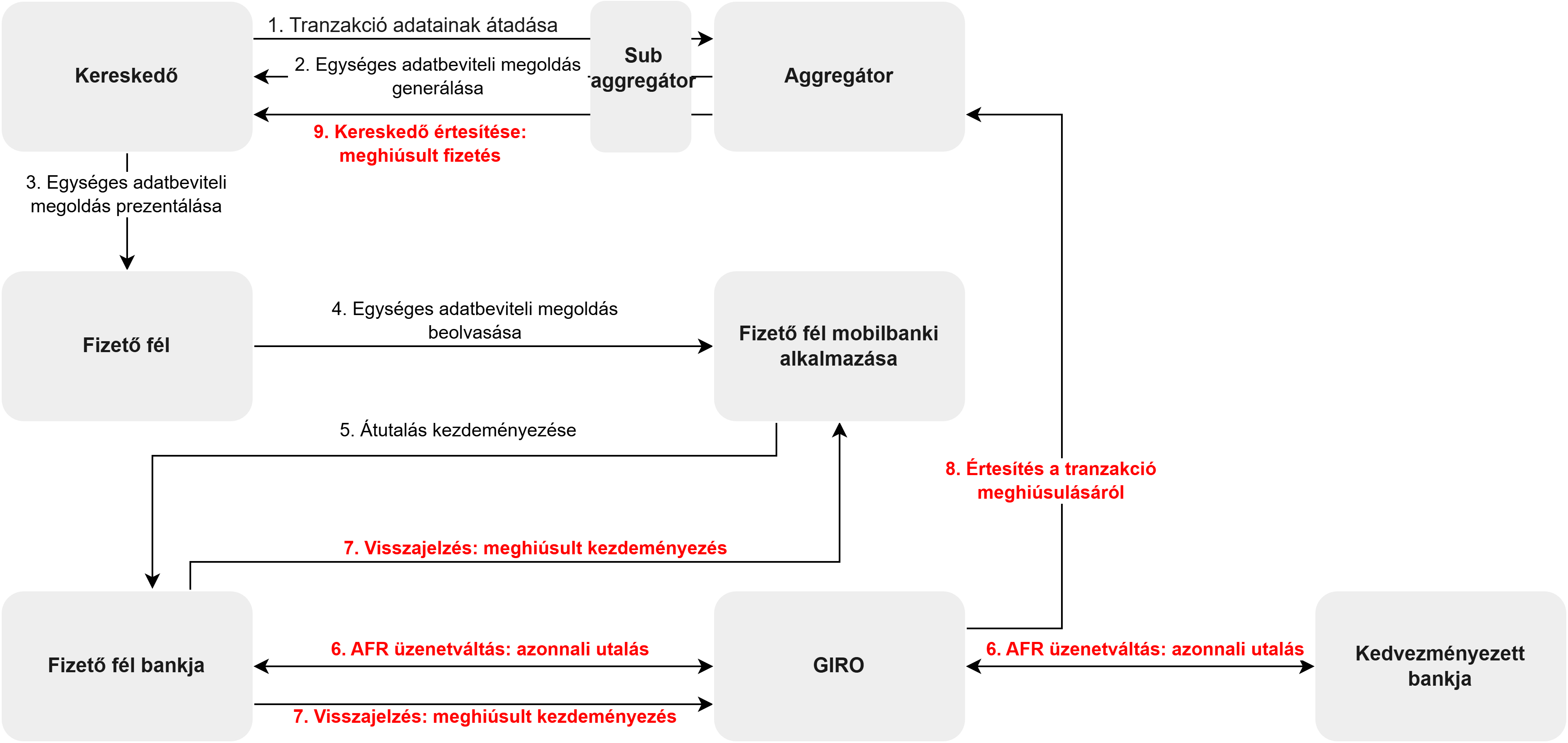
Process steps:
- The merchant's system transmits the current purchase data to the Aggregator via an electronic channel. A sub-aggregator may also be involved in the initiation and feedback process.
- The Aggregator creates the EAM according to the standard defined in the regulation, containing transaction and beneficiary data with an authentication code.
- The merchant displays the EAM on their POS system. For invoiced payments, the QR code is printed. For webshop purchases, a deeplink is generated. For NFC, the merchant's device broadcasts the data.
- The payer scans the EAM with their multi-function device.
- After passing EAM format checks and strong customer authentication, the payer's application initiates the instant transfer towards the payer's bank.
- The payer's bank sends the instant transfer message to GIRO. GIRO forwards the message to the beneficiary's bank.
- Either the payer's bank, GIRO, or the beneficiary's bank rejects the transaction (e.g. insufficient funds, account blocked). The rejecting party sends a rejection reason code in the feedback message.
- The beneficiary's bank (or GIRO) sends a negative feedback to the Aggregator with the rejection reason code.
- The Aggregator forwards the negative feedback to the sub-aggregator, who forwards it to the merchant. The merchant's system notifies the payer of the failed payment.